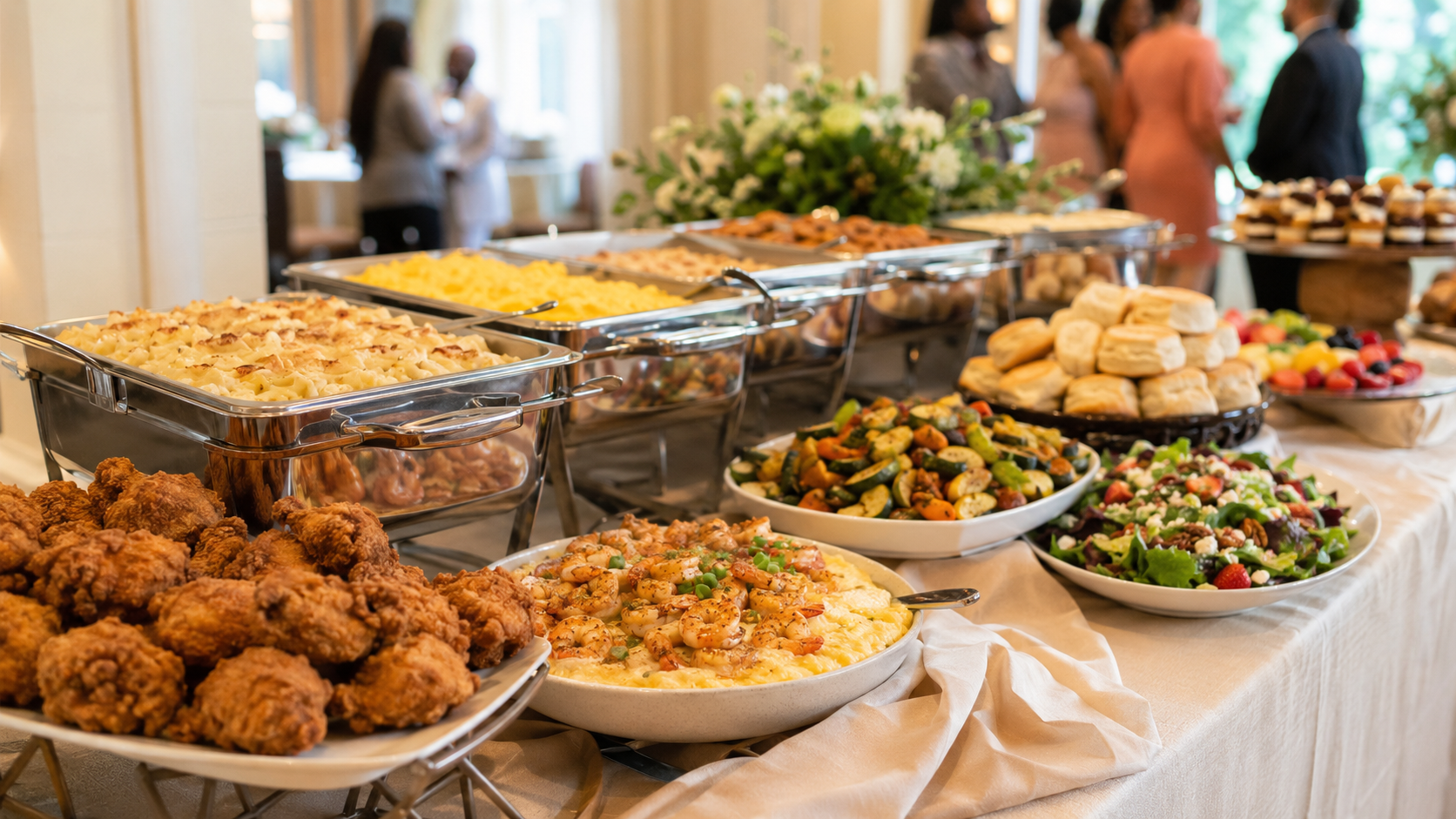

Planning food for a large gathering can quickly become confusing. How much food for 100 guests will be enough? How many entrées should you order? And how can you give everyone a satisfying meal without paying for trays of food that no one eats?
The right quantity depends on more than the number of people attending. The event time, serving style, menu, guest mix and length of the gathering can all affect how much food you need. For example, a baby shower brunch for 25 guests will require a different catering plan than a corporate lunch for 50 people or a wedding celebration with 100 attendees.
This catering portion guide will help you estimate food for 25, 50 or 100 guests. You will also learn how to balance entrées, sides, appetizers, desserts and drinks while keeping your event organized and your budget under control.
What Determines How Much Food You Need?
Guest count provides a starting point, but it should not be the only detail used to calculate catering quantities. Before placing an order, consider the time of the event, the type of meal and how guests will receive their food.
Time of day
Guests may eat lighter portions at a mid-morning baby shower than at an evening celebration. Breakfast and brunch menus often include smaller portions across several dishes. In contrast, lunch and dinner guests usually expect a more substantial entrée with filling sides.
Therefore, match the size of the meal to the event schedule. If your gathering falls between traditional meal times, a lighter menu may work well. However, an event scheduled during lunch or dinner should offer a complete meal.
Type of event
Different occasions create different catering needs. A corporate meeting usually requires a convenient meal that guests can enjoy without interrupting the schedule. Meanwhile, a wedding, birthday or baby shower may feature a larger buffet with more menu variety.
Repast, memorial and church gatherings may also need comforting food that the catering team can serve smoothly to guests arriving at different times.
Buffet or plated service
Buffets give guests the freedom to select the foods they prefer. However, some guests may take larger portions or sample several dishes.
Plated service provides more control because each person receives a prepared serving. Still, it may require additional staff, equipment and coordination.
For many private celebrations, church events and corporate gatherings, a buffet offers a practical balance of variety and convenience.
Number of menu choices
A larger menu does not mean you need a complete serving of every dish for every guest. If you offer two entrées, some people will choose one while others may take smaller portions of both.
As a result, your caterer should calculate each item as part of the complete meal instead of treating every selection separately.
Adults and children
Include children in the headcount, but consider their ages when estimating portions. Young children usually eat less than adults, while teenagers may eat adult-sized portions.
For example, a birthday party with many small children may require less food than a corporate event attended entirely by adults.
Length of the event
Guests may return to the buffet during a longer celebration. In comparison, a short office lunch will usually require fewer extra portions.
In addition, consider whether guests will arrive at the same time or throughout the event. A catering team may need to replenish the buffet in stages if attendance changes during the gathering.
Appetizers and desserts
If you serve substantial appetizers before the meal, guests may eat smaller entrée portions. Likewise, a dessert table with several selections can reduce the number of servings needed for each individual dessert.
Therefore, calculate appetizers, the main meal and dessert as one complete dining experience.
General Catering Portion Guide Per Person
The following amounts provide a useful starting point for a typical catered event:
| Menu item | General planning estimate |
|---|---|
| Appetizers before a meal | 3–5 pieces per guest |
| Appetizer-only gathering | 8–12 pieces per guest |
| Boneless entrée protein | 4–6 ounces per guest |
| Side dishes | 4–6 ounces per side |
| Salad | 2–3 ounces per guest |
| Bread, biscuits or rolls | 1–2 pieces per guest |
| Dessert | 1–2 small portions per guest |
| Nonalcoholic beverages | 2–3 servings per guest |
These estimates act as planning guidelines rather than fixed rules. Your final quantities should reflect the selected dishes, serving style and guest mix.
For instance, calculate bone-in foods, such as fried chicken, differently from boneless meat. A rich entrée with several filling sides may also require different portions than a lighter menu.
Therefore, ask your caterer to evaluate the menu as a complete meal.
How Much Food Do You Need for 25 Guests?
For smaller gatherings, a focused menu usually provides enough variety without creating excessive leftovers. Events of this size may include baby showers, bridal showers, birthday brunches, family celebrations and business meetings.
A balanced buffet for approximately 25 guests might include:
- One or two entrée choices
- Two complementary side dishes
- One salad, vegetable or fresh fruit selection
- Bread, biscuits or rolls
- One or two desserts
- Tea, lemonade, water or coffee
For a brunch event, you could combine an egg dish, chicken or another protein, breakfast potatoes, fresh fruit, biscuits and a sweet selection.
Although offering plenty of choices may sound appealing, too many dishes can increase the price and create unnecessary waste. Instead, choose a smaller selection of well-prepared foods that work together.
If you offer two entrées, you generally will not need 25 full portions of both. Your caterer can divide the quantities based on the popularity of each item and the rest of the menu.
How Much Food Do You Need for 50 Guests?
As the guest count increases, menu balance and buffet organization become more important. Catering for 50 people requires a clearer plan for displaying, serving and replenishing the food.
A typical buffet for approximately 50 guests could include:
- Two entrée choices
- Two or three side dishes
- Salad, vegetables or fruit
- Bread or rolls
- One or two dessert options
- Beverages
- A limited appetizer selection, if required
For an office lunch, you might choose one main entrée, a vegetarian alternative, two sides and dessert. Meanwhile, a baby shower or birthday celebration may benefit from an additional appetizer or a decorative dessert display.
Dietary requirements also become more noticeable as the guest list grows. Ask attendees in advance whether they need vegetarian, gluten-conscious or other menu accommodations. Then, clearly identify those options and order suitable quantities.
Buffet flow also matters. Place plates at the beginning of the buffet and arrange the food in a logical order. In addition, keep beverages and desserts in separate areas when possible. This setup can reduce crowding and help guests move through the line comfortably.
How Much Food for 100 Guests Is Enough?
Determining how much food for 100 guests to order requires careful planning. At this size, ordering too little may leave guests waiting for popular dishes. However, ordering too much can increase costs and create unnecessary waste.
A large catered buffet will commonly include:
- Two entrée selections
- Two or three side dishes
- Salad, vegetables or fruit
- Bread or rolls
- One or two desserts
- Beverages
- A reasonable buffer for unexpected needs
Start with the complete menu rather than ordering 100 servings of every item. If you serve two entrées, some guests will choose only one while others may sample smaller portions of both.
In addition, consider which entrée will attract more interest. A familiar favorite may need a larger quantity than a specialized or dietary selection. Your caterer can divide the portions based on the popularity of each dish and the number of accompanying sides.
For an event with 100 guests, buffet management becomes almost as important as the quantity of food. The catering plan may need to account for:
- The number of buffet lines
- Serving utensils and equipment
- Food temperature
- Replenishment times
- Setup and cleanup
- Buffet attendants
- Guest flow
- Reserved dietary meals
- The event schedule
A professionally organized buffet allows guests to receive fresh food without overcrowding the serving area. Furthermore, attendants can monitor popular dishes and replenish them as needed.
How Many Catering Trays Do You Need?
No single tray size serves the same number of guests in every situation. Tray capacity depends on several factors:
- The size and depth of the tray
- The type of food
- Whether the item serves as an entrée or a side
- The portion size
- The serving utensil
- The number of other dishes available
For example, a tray of a dense side dish will not serve guests in the same way as a tray of vegetables or a protein entrée. Similarly, a full tray may produce different serving counts depending on the caterer and the food inside it.
Consequently, ordering by tray count alone can produce inaccurate results. Instead, give your caterer the expected guest count, event type, service style and complete menu. The caterer can then determine how the different trays work together.
How Much Extra Food Should You Order?
A small buffer can help accommodate unexpected guests, larger appetites or last-minute attendance changes. However, you rarely need to order excessive amounts of every dish.
The ideal buffer will depend on:
- The accuracy of the RSVP count
- The possibility of unconfirmed guests attending
- The serving style
- The length of the event
- The number of adults and children
- Whether guests expect leftovers
- The venue’s food-storage rules
If you expect 50 guests but several people have not responded, discuss the uncertainty with your caterer. Together, you can choose a reasonable adjustment without adding large amounts of every entrée and side.
Keep Buffet Food Fresh and Safe
Food quantity matters, but safe serving also deserves attention. Keep hot and cold dishes at suitable temperatures, replenish the buffet in smaller amounts and avoid leaving perishable foods at room temperature for extended periods.
The U.S. Food and Drug Administration’s buffet safety guidance offers helpful information for serving food safely at parties and special events.
In addition, professional catering support can help coordinate food placement and replenishment. As a result, the buffet can remain fresh, attractive and organized throughout the event.
How to Feed a Large Group Without Overspending
Fortunately, feeding a large group does not require an unnecessarily complicated or expensive menu. Careful planning can help you control costs while still giving guests a satisfying meal.
Choose a buffet-style menu
Buffets work well for baby showers, corporate events, church functions, birthdays and family gatherings. They provide menu variety without the complexity of individually plated meals.
Limit the number of entrées
Two strong entrée choices often work better than a long list of proteins. Too many options can increase preparation requirements, costs and leftovers.
Instead, select entrées with broad appeal and include a suitable alternative when dietary needs require one.
Select filling, complementary sides
Potatoes, rice, pasta, vegetables, salads and bread can help create a complete meal. However, the sides should complement the entrée instead of feeling like unrelated additions.
Match the menu to the event time
A morning or early-afternoon celebration may work well with a brunch buffet. On the other hand, a lunch or dinner event should offer a more substantial meal.
Matching the menu to the schedule can help you avoid ordering food that guests do not expect or need.
Confirm the guest count
Give attendees a clear RSVP deadline. The more accurate the guest count becomes, the easier it is to order suitable quantities.
Also, ask guests to report dietary needs when they respond. This information allows the caterer to prepare the correct alternatives.
Avoid unnecessary menu duplication
If you plan to serve appetizers, a full meal and several desserts, you may not need large portions in every category. Instead, consider the total amount of food each guest will encounter throughout the gathering.
Request a menu based on your budget
Share your estimated guest count and preferred budget range with the caterer. Your caterer can then recommend a menu that emphasizes your priorities and removes items that add cost without improving the experience.
If you are comparing catering prices, read our guide to brunch catering costs in Marietta, GA.
Sample Catering Ideas for Different Events
In addition, the type of event should influence both the menu and the portions.
Baby showers
Baby showers often work beautifully with brunch or lunch buffets. Consider breakfast favorites, chicken, fresh fruit, potatoes, salads, sandwiches and small desserts that guests can enjoy while socializing.
Explore our baby shower catering services in Marietta and Atlanta.
Corporate meetings and office lunches
Corporate menus should be convenient, presentable and easy to serve. Entrées with two sides, breakfast selections or lunch buffets can keep meetings organized while providing enough variety for employees and guests.
Learn more about corporate catering in Atlanta and Marietta.
Birthday and graduation parties
For birthdays and graduation celebrations, select familiar dishes that appeal to different age groups. Buffet service gives guests flexibility while allowing the host to enjoy the occasion instead of managing the meal.
Weddings and bridal celebrations
Wedding brunches, bridal showers, rehearsal gatherings and receptions require additional attention to presentation, timing and service. Therefore, coordinate the menu quantities with the event schedule and final guest count.
Discover our wedding catering services in Marietta and Atlanta.
Repast and memorial gatherings
Repast catering should provide comforting food with dependable and respectful service. Flexible buffet menus can support small family gatherings as well as larger church and community receptions.
View our funeral and repast catering services.
Church and community gatherings
Church events often include guests of different ages and changing attendance numbers. Familiar entrées, generous sides, bread and simple desserts can provide a practical and welcoming meal.
Common Catering Quantity Mistakes to Avoid
Even with a reliable guest count, several common mistakes can lead to shortages or waste.
Ordering a full portion of every entrée for every guest
Most guests will not eat a complete portion of every entrée. Therefore, calculate the entrées as part of the complete buffet.
Finalizing the order before collecting RSVPs
An estimated range helps during early planning. However, use the most accurate guest count available when confirming the final order.
Forgetting to include children
Include children in the headcount and provide their ages when possible. Young children may eat smaller portions, while teenagers may require adult-sized servings.
Ignoring the event time
Guests attending during lunch or dinner will usually expect a complete meal. In contrast, a gathering held between meal periods may need lighter portions.
Offering too many similar dishes
More choices do not automatically create a better buffet. Instead, build a balanced menu with distinct entrées and complementary sides.
Forgetting dietary requirements
Do not wait until the event day to address dietary needs. Collect the information early and discuss suitable options with your caterer.
Assuming every catering tray serves the same number
Tray sizes and portion counts vary by dish. Always ask how each tray contributes to the complete menu.
When Should You Contact a Caterer?
You do not need every event detail finalized before contacting a caterer. However, it helps to know:
- Your preferred event date
- The approximate number of guests
- The event location
- The type of occasion
- Your preferred service style
- Your general menu ideas
- Your estimated budget
We recommend booking early, especially for weekends, holidays and popular wedding or shower dates. Once you reserve the date, you can usually confirm the final guest count closer to the event according to the caterer’s deadline.
Frequently Asked Questions
How much food should I order for 25 people?
For 25 guests, consider one or two entrées, two sides, bread, dessert and beverages. However, the final quantities will depend on the event time, serving style and number of menu choices.
How many catering trays do I need for 50 guests?
The required number of trays depends on the tray size, type of food, portion size and complete menu. Because trays do not have a universal serving capacity, ask your caterer to calculate quantities based on your selected dishes.
How much food is needed for a party of 100?
A typical meal for 100 guests may include two entrées, two or three sides, salad, bread, dessert and drinks. Adjust the amount of each item according to the serving style, expected popularity and number of appetizers.
Is buffet catering suitable for a large group?
Yes. Buffet catering can provide a practical and welcoming experience for a large group. It offers variety and allows guests to select the foods they prefer. However, larger events require careful setup and buffet management.
How many entrées should a catering buffet include?
One or two entrées will suit many events. A second choice adds variety and can accommodate different preferences without making the menu unnecessarily complicated.
Is buffet catering more affordable than plated catering?
Buffet catering can require less individual meal preparation and table service than a plated dinner. Nevertheless, pricing will depend on the menu, guest count, staffing, equipment and setup requirements.
How much extra food should I order?
The appropriate buffer depends on RSVP accuracy, guest mix, serving style and event duration. Discuss uncertain attendance with your caterer instead of automatically ordering large quantities of every dish.
How far in advance should I order catering?
Contact the caterer as soon as you have an approximate date, location and guest count. Early booking becomes especially important for weekends, holidays and popular celebration dates.
Plan the Right Amount of Food for Your Marietta Event
Knowing how much food for 100 guests to order can prevent shortages, control unnecessary spending and make the event easier to manage. However, the best catering plan is not simply the one with the most food. It is the one that provides suitable portions, balanced choices and dependable service for your guests, schedule and budget.
Catering By Phyllis provides Southern-inspired catering for baby showers, corporate events, weddings, birthdays, church functions, repast gatherings and private celebrations throughout Marietta, Atlanta, Cobb County and surrounding communities.
Not sure how much food your gathering needs? Share your event date, location, approximate guest count and preferred menu style with our team. We can help you plan a thoughtful menu for an intimate gathering of 25 or a large celebration with 100 guests or more.